Day 10 Herb of the Day Elder! Magic and Medicinals. What our Ancestors Knew, by The Magic Apothecary, Mary Elizabeth Micari


Day 10 Herb of the Day Elder! Magic and Medicinals. What our Ancestors Knew, by The Magic Apothecary, Mary Elizabeth Micari

Disclaimer: The following information is of an educational and general nature and should not be construed as legal advice. You should consult appropriate written and professional sources to answer questions related to your individual situation. Exercising one’s rights often entails some element of risk, and you should verify all information relevant to your situation before acting; the author and publisher disclaim any responsibility or liability for any loss incurred as a consequence of the use of any information herein.

Elder (Sambucus nigra)

Black Elder. Common Elder. Pipe Tree. Bore Tree. Bour Tree. (Fourteenth Century) Hylder, Hylantree. (Anglo-Saxon) Eldrum. (Low Saxon). Ellhorn. (German) Hollunder. (French) Sureau.
Parts Used—Bark, leaves, flowers, berries.

The Elder, with its flat-topped masses of creamy-white, fragrant blossoms, followed by large drooping bunches of purplish-black, juicy berries, is a familiar part of any countryside and in many gardens.  The summer begins with sweet white elder flowers and ends with the berries!

Some History:

The word ‘Elder’ comes from the Anglo-Saxon word aeld. In Anglo-Saxon days we find the tree called Eldrun, which becomes Hyldor and Hyllantree in the fourteenth century. One of its names in modern

The generic name Sambucus occurs in the writings of Pliny (doctor and herbalist) and other ancient

Uses as a wood:

The wood of old trees is white and easily cut. It polishes well too and has been used for making skewers for butchers, shoemakers’ pegs, and various turned articles, such as tops for angling rods and needles for weaving nets, also for making combs, mathematical instruments and several different musical instruments.

Medicine:

Cautions for Elderberry

Too much raw elderberry can upset your stomach and cause diarrhea. Pregnant or nursing women are advised to use caution when consuming this herb.

The leaves have an unpleasant smell when crushed and they have been used to ward off most insects.  As a natural organic deterrent, you can boil these leaves and then sprinkle on plants, flowers and trees.  It will keep aphids and caterpillars off.  You can use this on yourself as well. You can also just crush the leaves and put on your face and exposed skin to keep off biting insects.

The bark has been used as a clothing dye for centuries. It is a dark, green black color.

Elder Flowers and Elder Berries have been used for making many home-made drinks and preserves that are truly delicious! These berries are (yes, I have harvested and eaten them right off the tree) sweet and almost like raisins.  They make a great home-made brandy.  ¼ berries, ¾ brandy or vodka. Let it sit for 6 weeks and voila! Always water it down and add sugar! It is a great way to prevent colds and flu!  You can also add to mulled wine, cider or red or white wine of your choice. There are multiple recipes for this on line as there are for Elder jellies and jams too! You can use them the way you would any berry.

Many use the flowers too as an addition to these wines and brandies and a nice tea can be brewed of either or both. The berries the stronger cold and flu preventative but the flowers are useful for this too.  The flowers do better as an ointment which can be made at home! Just add the flowers to oil in a double boiler. Wait for them to wilt and cool. Strain off flowers, place back into the double boiler and add a small bit of wax from soy or bees wax. Put in a container and let cool.

If you boil the flowers and make a gruel of them it is said that they will reduce a fever

Many people put the flowers in a vinegar and use on salads. You can use the berries this way too!

Parts Used Medicinally—The bark, leaves, flowers and berries.

You might have to find and dry the bark. This must be used with extreme caution if you do.  It can be made into an infusion (strong tea) and used and an emetic (making one vomit) It can be used as a diuretic as well.

Elder Leaves

Used in the preparation of an ointment historically called Unguentum Sambuci Viride, Green Elder Ointment, which is a remedy for bruises, sprains, chilblains, for use as an emollient, and for applying to wounds.

Here’s an OLD compound recipe:

“It can be compounded as follows: Take 3 parts of fresh Elder leaves, 4 parts of lard and 2 of prepared suet, heat the Elder leaves with the melted lard and suet until the colour is extracted, then strain

The Flowers

Elder Flowers are chiefly used in pharmacy in their fresh state for the distillation of Elder Flower Water!

The flowering season only lasts for about three weeks in June, the flowers are often dried and can be purchased.  They can also be used dry for teas and infusions

Elder Flower Water is an old pharmaceutical mixture.  Flowers are made into a tea or infusion and then used for mixing medicines used for eye and for skin lotions.  You can find it in may French beauty concoctions under the name or  Eau de Sureau. Sureau is the French name for Elder. It can be used and often is as a very light form of astringent.

Here is an OLD recipe that can be made at home:

Fill a large jar with Elder blossoms, press them down.  Make sure all stalks are removed.  Pour 2 quarts of boiling water on them.  When they are cooled add alcohol (vodka is fine 80 proof and higher) let them stand overnight covered then strain and put into bottles.

“Fill a large jar with Elder blossoms, pressing them down, the stalks of course having been removed previously. Pour on them 2 quarts of boiling water and when slightly cooled, add 1 1/2 OZ. of rectified spirits. Cover with a folded cloth and stand the jar in a warm place for some hours. Then allow it to get quite cold and strain through muslin. Put into bottles and cork securely.”

Elderflower Water in our great-grandmothers’ days was a household word for clearing the complexion of freckles and sunburn and keeping it in a good condition. Every lady’s toilet table possessed a bottle of the liquid, and she relied on this to keep her skin fair and white and free from blemishes, and it has not lost its reputation! You can use it after swimming to help the skin stay soft and free of pollutants and salt. If you have blemishes you can add the elder flower water to glycerin and use it twice a day.

Elder Flowers, if placed in the water used for washing the hands and face, will soften the skin. To use often place them in a small muslin bag kept by the sink or use this bag in the bathwater! It has been said it will not only help the skin but calm nerves and irritability too!

The flowers were used by our ancestors bronchial and pulmonary disease, and in scarlet fever, measles and other diseases like Chicken pox. An infusion (strong tea) of the dried flowers, Elder Flower Tea, is said to promote expectoration! It is gently laxative and can induce perspiration. It is a good old-fashioned remedy for colds and throat trouble, taken hot before going to bed. An almost perfect cure for the flu in its first stage is a strong infusion of dried Elder Blossoms and Peppermint. Put a handful of each herb in a bowl and two pints of boiling water on them.  Let them steep for about a half an hour and then strain. Sweeten and drink in a warm bed as hot as you can stand it.  You will begin to perspire and have a good sleep! You might be on a very fast recovery track if you do this as soon as you feel a flu or cold coming on.  It is recommended you stay in bed at least 36 hours

Elder Flower Tea, cold, was also considered almost as good for inflammation of the eyes as the distilled Elder Flower Water.

Tea made from Elder Flowers has also been recommended as a splendid spring medicine, to be taken every morning before breakfast for some weeks, being considered an excellent blood purifier.

Externally, Elder Flowers are used in fomentations (poultice) to ease pain and take down inflammation.

A lotion can be made by pouring boiling water on the dried blossoms. This is a healing, cooling and soothing lotion. To make Add 2 ½ ounces of Elder Flowers to 1 quart of boiling water, infuse for an hour and then strain. The liquid can be applied as a lotion on a cloth for boils and skin eruptions. You might also want to try this for a headache, putting the cloth with Elder water on the temples.

People have even eaten the buds with a little oil and vinegar to help with skin eruptions!

Elder Vinegar made from the flowers is an old remedy for sore throats.

Elder Flowers, with their subtle sweet scent are used all the time is cooking in batters for funnel cakes and muffins and in much other baking

Elder Berries

The Romans made use of Elderberry juice as a hair-dye!  It makes the hair black.

The berries are extensively used for the preparation of Elder Wine.

They can be used for rheumatism and again, like the flowers can be diuretic and emetic.  Can also be sued as a laxative.

Elderberry Wine has a reputation like the flower in tea of taken hot, at night, for promoting perspiration in the early stages of severe flue and colds. If the cold has shivering and cold throat.  Like Elderflower Tea, it is one of the best preventives known against the advance of the flu and chill.  It can aid in asthma.

Since ancient times, something called a ‘Rob’ (a vegetable juice thickened by heat) has been made from the juice of Elderberries simmered and thickened with sugar, forming an invaluable cordial for colds and coughs!

To make Elderberry Rob:

Take 5 lb. of fresh ripe, crushed berries are simmered with 1 lb. of sugar and the simmer until the juice is the thickness of honey.  The Rob can be bottled and stored for the winter.  You can make this yourself or contact an herbalist (like me) to make it for you in the fall.

A Syrup of Elderberries can be made by picking or using dried berries.  No stalks.  Stew them in a little water in a pan.  After straining them when soft, add ½ oz of ginger.  Boil the ingredients for an hour, strain and bottle.  It is an excellent cure for a cold.  You can also add more anti flu ingredients like plantain, red cherry for coughs, echinacea, garlic and more.  Add sugar.

SOME OLD ELDER WINE RECIPES

From a Modern Herbal by Mrs. Grieve

“’To every quart of berries put 2 quarts of water; boil half an hour, run the liquor and break the fruit through a hair sieve; then to every quart of juice, put 3/4 of a pound of Lisbon sugar, coarse, but not the very coarsest. Boil the whole a quarter of an hour with some Jamaica peppers, ginger, and a few cloves. Pour it into a tub, and when of a proper warmth, into the barrel, with toast and yeast to work, which there is more difficulty to make it do than most other liquors. When it ceases to hiss, put a quart of brandy to eight gallons and stop up. Bottle in the spring, or at Christmas. The liquor must be in a warm place to make it work.’

Magical Uses of Elder

Through time The Elder became the emblem of sorrow and death. There are many superstitions that surround it and legends which group up over time.  Some won’t cut it because they fear bad luck. Gypsies never use the wood in camp fires and fear it being in their woods. Supposedly the cross of Jesus was made from Elder and because of that people were afraid to harm it.  Most northern countries of Europe see Elder as the Mother tree and deeply associated with Magic. In its branches was a dryad the Hylde-Moer, the Elder Tree Mother, who lived in the tree.  If the tree was cut and made into furniture it was believed that the Hylde-Moer was in it still and would haunt the owners.   People feared ever putting a child in an Elder wood cradle because of the Hylde-Moer being in the wood and haunting the child. It was said that to chop down the tree one would ask the Hylde-Moer and if no answer came to stop you then it was ok to proceed.

The Russians believed that Elder-trees drive away evil spirits, and others in the European north thought of it as a spell to take away fever. In Southern Italy people thought that sticks of its wood would kill serpents and drive away robbers.  Some people added a stick of Elder into their wedding bouquets for good luck. In old England it was believed that the Elder was never struck by lightning and a twig of it tied into three or four knots and placed and carried in the pocket was a charm against rheumatism. It was also used on doors of barns to protect animals.

An Elder bush, trimmed into the form of a cross, was planted on a new-made grave, and if it blossoms, the soul of the person lying beneath it is happy was a common thought too Green Elder branch were also buried in a grave to protect the dead from evil spirits. In some places the driver of the hearse would carry a whip make of Elder wood.

In Denmark there was an old belief that anyone standing under an Elder tree on Midsummer Eve would see the King of Fairyland ride by, attended by all his retinue.

Apart from all these traditions, the Elder has had from the earliest days a firm claim on the popular affection for its many sterling virtues.

Woodwind instruments made from Elder are said to produce music most beloved of the Spirit world, hinting at Elder’s power to connect energies.

In astrology, Elder is considered a feminine tree and is governed by Venus. Its element is water.

Modern Information: Web Md: https://www.webmd.com/vitamins-supplements/ingredientmono-434-elderberry.aspx?activeingredientid=434&activeingredientname=elderberry
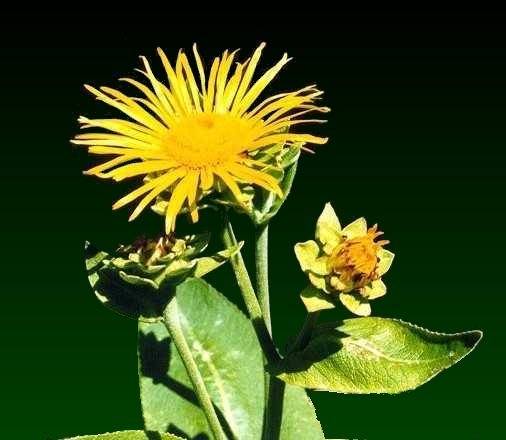
Day 5 Herb of the Day Elecampane! Magic and Medicinals. What our ancestors knew by The Magic Apothecary, Mary Elizabeth Micari

Disclamer: The following information is of an educational and general nature and should not be construed as legal advice. You should consult appropriate written and professional sources to answer questions related to your individual situation. Exercising one’s rights often entails some element of risk, and you should verify all information relevant to your situation before acting; the author and publisher disclaim any responsibility or liability for any loss incurred as a consequence of the use of any information herein.

elecampane

ELECAMPANE  (Inula Helenium)

Also known as Scabwort. Elf Dock. Wild Sunflower. Horseheal. Velvet Dock.

Do not take Elecampane without asking your Physician and do not use when breast feeding or pregnant.

Part Used-Root.
Where it Grows: Elecampane is a very large plant.  It is found throughout England and the Europe and now cultivated and growing wild in the Eastern USA.  Can be found from Nova Scotia to the deep south and as far west as Missouri.   It grows in damp pastures and in shady places.  This was a common medicinal plant used for many sicknesses in the Middle Ages.

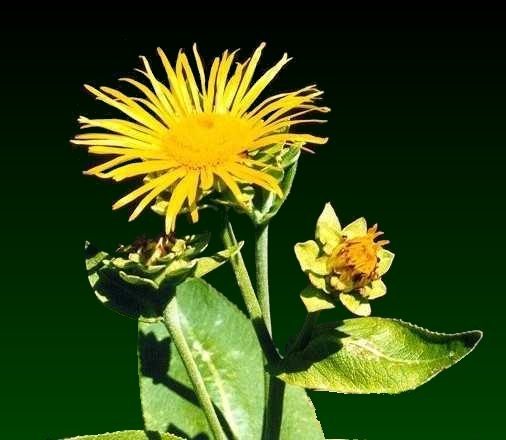
The stem grows from 4 to 5 feet high, is very stout and deeply rooted.  The whole plant has down, and it produces a large flower with pointed leaves.  It looks a bit like Mullein as it is downy and the leaves are velvety underneath.

The plant is in bloom from June to August. The flowers are bright yellow, with large heads, 3 to 4 inches in diameter, on long stalks, resembling a double sunflower. The broad leaves under the head are velvety. After the flowers have fallen, these scales spread horizontally, and the removal of the fruit shows the a beautifully regular arrangement of little pits on the receptacle, which form a pattern like the inside of a watch. The fruit is quadrangular and crowned by a ring of pale-reddish hairs it is called the pappus.

The plant comes from a perennial root which is large and succulent, with large, fleshy roots.

Elecampane was known to the ancient writers on agriculture and natural history, and even the Roman poets knew it! They called it Inula and said its root was used both as a medicine and a condiment!  The Monks made cordials from it and many ate the roots daily.

Elecampane is frequently mentioned in the Anglo-Saxon writings on medicine in England prior to the Norman Conquest; it is also the ‘Marchalan’ of the Welsh physicians of the thirteenth century, and was generally known during the Middle Ages.

There was a candy made with it in the Middle Ages used for Asthma.  It was then called Elf-Dock or Elf root or Wort.

Part Used Medicinally For pharmaceutical use, the root is taken from plants two to three years old; when more advanced it becomes too woody. As a rule, it is dug in autumn. Elecampane root has at first a somewhat glutinous taste, but by chewing, it becomes aromatic, and slightly bitter and pungent; it has an agreeably aromatic somewhat camphorate orris-like odor. Please refer to information and pictures when searching for plants in the wild.  Most plants I mention will be available from reputable herb sellers in the USA already grown, cleaned and packed for you.

The substance most abundantly contained in Elecampane root is Inulin. Inulin can first be described as a fibrous carbohydrate that can be classified as a starch.  This substance can be found in a variety amount of foods such as vegetables, fruits, and herbs. Inulin is in the class of compounds known as fructans and is a naturally occurring oligosaccharide, meaning it has several simple sugars linked together.  Elecampane is the richest source of inulin.

The amount of Inulin varies according to the season, but is more abundant in the autumn.

Medicinal Action and Uses Elecampane is a Diuretic, tonic, diaphoretic (causes perspiration), expectorant, antiseptic, astringent and gently stimulant. It was used by the ancients in certain diseases of women, also in tuberculosis, in heart failure and in skin infections. Its name ‘Scabwort’ came from the fact that a decoction (root boiled in water) of it is said to cure sheep affected with scabs, and the name ‘Horse-heal’ was given it from its curing the skin diseases of horses.

In herbal medicine it is chiefly used for coughs, consumption and other pulmonary complaints.  It is a favorite remedy for bronchitis. It has been employed for many years with good results in chest infections, and chronic diseases of the lungs such as asthma.  It can help with respiratory difficulties and helps with expectoration.

The root used not only to be candied and eaten as a sweetmeat, but lozenges were made of it as I mentioned earlier about the candies used for asthma.

Some have used it on the skin as a treatment of sciatica and neuralgia.

Modern scientific research has proved that the claims of Elecampane to be a valuable remedy in pulmonary diseases.


Elecampane root can be boiled into a decoction, made into and extract or tincture or dried and mixed with sugar. Some have left it to sit in vinegar or wine and used it that way.

Used as a syrup, for gassy stomach, to relieve coughs, shortness of breath and wheezing.  Has been used for fever, skin eruptions and even the plague! It can be made into and used as an ointment as well.

Magical Properties

Planetary Influence: Mercury

It is associated with Fairies and is also associated with elves.

Elecampane can be used to encourage a better connection between mind and body. It is especially good for those who live in their intellect and ignore their physical health, allowing them to relax and trust their feelings a little more. It brings about balance – the healthy and normal balance between mind, emotions and body. In this case it can be a grounding herb.

Elecampane is useful for those who are home sick and during uncertain times.  It is used in spells to ward off bad luck and loss.

It is also used to open the third eye and clairvoyance.  It is said to give clear sight.  It can be used in initiation rites to open the mind to the sprit world.  It can be added to incense to promote joy and communication and for blessings of babies and mothers.

It was used in to treat illnesses caused by evil faery folk. Can be used to promote communication with the faery realm and as an offering to these beings.  Elecampane was very well known by the Anglo Saxons, who used it extensively both in medicine and magic.  It was used to treat elf shot which is mentioned above as well.  This was a medical condition believed to be caused by invisible elves shooting invisible arrows at a person or animal causing sudden shooting pains in one part of the body.

What an amazing herb and what an amazing history.  Please take some time to explore this herb and its stories and uses.  This magic and medicine still seem to be one!


Modern Information Web MD: https://www.webmd.com/vitamins-supplements/ingredientmono-2-elecampane.aspx?activeingredientid=2&


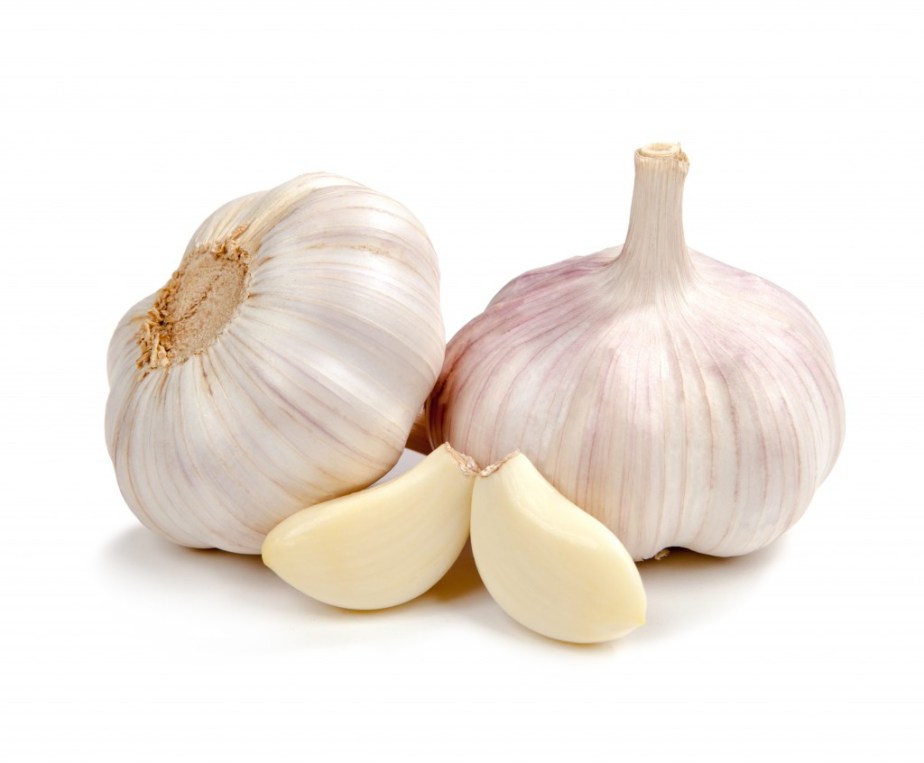
Day 4 Magic and Medicinals Garlic – What our Ancestors Knew by The Magic Apothecary

garlic-1024x846

Day 4 Herb of the Day! GARLIC!

Magic and Medicinals. What our ancestors knew by The Magic Apothecary, Mary Elizabeth Micari
Disclamer: The following information is of an educational and general nature and should not be construed as legal advice. You should consult appropriate written and professional sources to answer questions related to your individual situation. Exercising one’s rights often entails some element of risk, and you should verify all information relevant to your situation before acting; the author and publisher disclaim any responsibility or liability for any loss incurred as a consequence of the use of any information herein.

Garlic (Allium sativum)
Garlic, some of us love it, some not but Garlic, especially in its raw form, has been used for healing since ancient times. It was used for its powerful healing forces by the ancient Greeks, Egyptians, Babylonians, Assyrians, Romans who always planted garlic on the battlefield and any new conquests they had and the Chinese.

The healing properties of garlic are wide and varied, ranging from antioxidant, antifungal, antiviral and antibacterial properties to cancer-fighting and immune-boosting activity. Raw garlic has been used as a medicinal plant to prevent — and in some cases, treat or even heal — various health complaints for centuries.

Many people look for a natural way to reduce their risk of cardiovascular diseases, cancer, asthma attacks, bouts of cold or flu, abnormal hair loss, or some skin conditions are likely to reap the most health benefits by regularly eating garlic.

Note: Check with your physician before using garlic for any medicinal purposes.

Garlic as an Antifungal Agent

The medicinal use of garlic as an antifungal has been validated by numerous research papers and publications. Most of the antifungal properties of garlic have been attributed to allicin. Allicin is called a phytochemical and is produced when raw garlic cloves are crushed or chopped. By chopping or crushing you can maximize the allicin-content and you should let the chopped or crushed garlic sit several minutes before using it. Allowing chopped or crushed garlic to sit for 10 to 15 minutes before using it can significantly increase the amount of allicin it produces.

Garlic has been used to treat acne and conditions linked to the overgrowth of Candida yeast in the body and works well to rid women of yeast infections (chop up finely, add to some yogurt and put into a gauze. Insert and watch it work!) Some herbalists also suggest that garlic may have dandruff healing properties due to its ability to fight Pityrosporum ovale (P. ovale), a small fungus that lives on the scalp and that may play a role in the development of dandruff.

Antioxidant
Properties of raw garlic are linked to its antioxidant qualities. These antioxidant properties are largely attributable to allicin, the same compound that is responsible for the antifungal properties of crushed raw garlic!! Allicin has shown to be one of the most potent antioxidants found in foods. In addition to allicin, garlic has large amounts of antioxidant vitamins and minerals such as vitamin C, zinc and selenium.
Antioxidants in garlic help protect the body from free radicals, which are destructive oxygen molecules that attack healthy cells and can cause cellular damage. Due to their destructive effects on cells, free radicals are heavily implicated in several diseases including eye disorders, dementia, rheumatoid arthritis, cardiovascular problems, diabetes, atherosclerosis, an impaired immune system, certain types of cancer, and even Alzheimer’s disease.

In addition to helping with common diseases and conditions, the free radical neutralizing properties of garlic can help keep your skin looking young by fighting premature aging of the skin provoked by excessive exposure to sunlight.

When your skin is exposed to sunlight, it creates powerful enzymes called metalloproteinases which help repair sun-damaged connective tissue. However, not all metalloproteinases are good for us: some metalloproteinases destroy collagen fibers, which can lead to wrinkles and fine lines. Free radicals appear to activate these destructive metalloproteinases.

Natural Antibiotic
During the nineteenth century, the French chemist and microbiologist Louis Pasteur examined the use of raw garlic juice as a potential antibacterial agent and found garlic to be capable of killing bacteria much in the same way as penicillin does. Garlic was used widely as an antibacterial agent to disinfect and heal wounds during World War II. Since then, several research studies published in medical journals have confirmed the antibacterial and antiviral properties of garlic. In addition to its ability to control bacterial and viral infections, garlic has been shown to fight and heal infections caused by other microbes and worms.

Due to the healing properties of garlic this medicinal herb has also used in the treatment of some infections that are difficult to treat due to the presence of bacteria that have become resistant to prescription drugs such as antibiotics. However, more research is needed in this area before definite conclusions about the efficacy of garlic as an antibiotic can be made.

Anti-Cancer
Many laboratory tests have also found garlic and garlic extracts to exert strong anti-cancer effects. Also, several epidemiologic studies support the idea that garlic — especially raw garlic — can help prevent certain types of cancer. According to a large-scale review of epidemiologic studies, the strongest evidence for anti-cancer effects of raw garlic pertains to stomach and colorectal cancers. This review, which appeared in the American Journal of Clinical Nutrition in 2000, analyzed epidemiological studies published on stomach, colon, head and neck, lung, breast and prostate cancers since 1966.

Raw garlic appears to exert its anti-cancer effects through multiple mechanisms, including inhibition of free radical production, activation of enzymes that detoxify carcinogens, and regulation of cell-cycle arrest. Garlic has been shown to induce apoptosis. Apoptosis, also known as programmed cell death, is the body’s normal way of getting rid of unneeded or abnormal cells, but cancer cells employ mechanisms that allow them to evade apoptosis, so they can grow uncontrollably at the expense of healthy cells and tissues.

Insulin Resistant People
Research suggests that a healthy diet rich in garlic may be used successfully as a complementary treatment for insulin resistance, a physiological condition that remains a major medical challenge of the twenty-first century. Insulin resistance has been linked to many diseases and conditions including pre-diabetes and type 2 diabetes, excess body weight (especially around the waistline), adult acne and heart disease. In insulin resistant people, the body’s cells are no longer able to effectively respond to the actions of the hormone insulin.

According to a study published in the European Journal of Pharmacology in 2005, the health benefits of garlic for insulin resistant people may be linked to the presence of garlic oil and diallyl trisulfide in garlic. In addition to having wide-ranging healing properties documented in previous studies, these two compounds appear to improve the body’s ability to effectively respond to the actions of insulin and thus fight insulin resistance.

Magic and Garlic
Garlic is masculine in nature and associated with the planet Mars, the element fire and the sign Aries. It is sacred to Hecate and is a suitable offering to her left at a crossroads.
A spell to rid oneself of an unwanted lover: Place a clove of garlic intersected with two crossed pins where he is sure to walk. When he walks over it, he will lose interest.
A potion to draw a lover made of a strand of the target’s hair, threads from his or her clothing, alcohol and garlic. You would have to make the target ingest this, and then he or she would fall madly in love with you.
Garlic cloves can also be used, with other things, to stuff poppets intended for banishing, hexing and removing curses or people from one’s life.
Garlic braids hung over the door repel thieves and envious people as well as bring good look. Change the braid every year. Hanging garlic over a bedroom door will draw lovers into it.

Garlic is said to have aphrodisiac powers when eaten.
Wiping a knife with garlic juice empowers it against negative energies.
A clove of garlic can be added to any mojo bag or spell to strengthen its energy.
Garlic is used for exorcism, spell-breaking, invoking passion, protection and strength.
Also used to protect against psychic and physical vampirism.
Interesting! You mean Garlic protects, heals, removes and saves us from death as well as making us strong and more attractive. Seems like the medicinal uses and magic are the same…once again!
Modern information: WebMD:https://www.webmd.com/vitam…/ingredientmono-300-garlic.aspx…

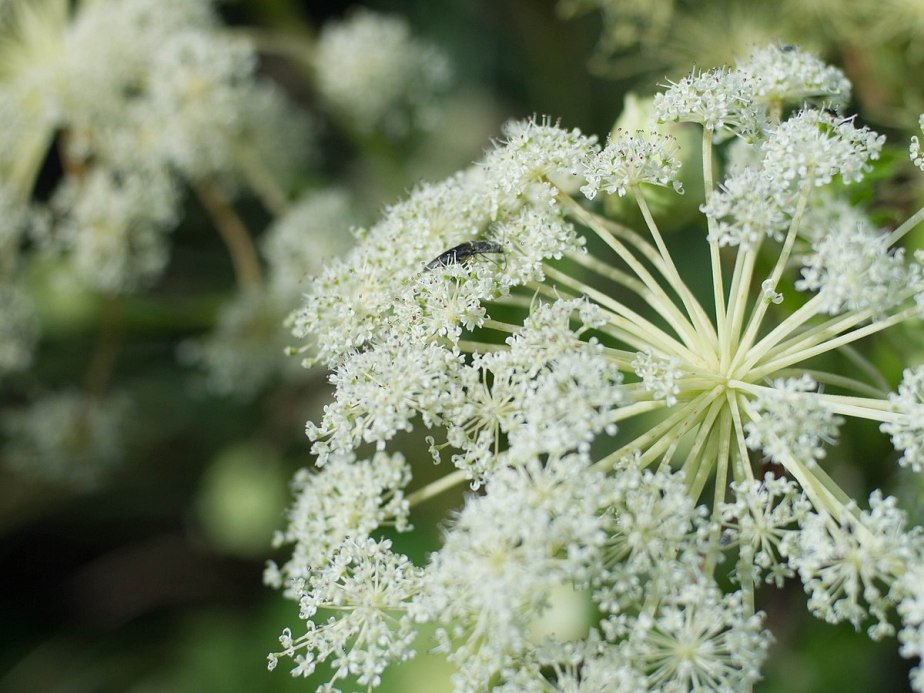
Day 3 Magic and Medicinals Angelica What our Ancestors Knew by The Magic Apothecary


Day 3 Herb of the Day! Angleica!

Magic and Medicinals. What our ancestors knew by The Magic Apothecary, Mary Elizabeth Micari

Disclamer: The following information is of an educational and general nature and should not be construed as legal advice. You should consult appropriate written and professional sources to answer questions related to your individual situation. Exercising one’s rights often entails some element of risk, and you should verify all information relevant to your situation before acting; the author and publisher disclaim any responsibility or liability for any loss incurred as a consequence of the use of any information herein.

Angelica (Angelica Archangelica)

Parts Used: roots, stems, seeds, leaves

Angelica is closely related to Dong Quai, which is one of the most respected female tonics in Traditional Chinese Medicine.  Angelica has traditionally been used to help bring on a delayed labor and to help expel the placenta following childbirth. Angelica also helps to relieve painful cramping during menstruation.  It has been known to bring on delayed menstruation or Dysmenorrhea. It can help with boating from PMS as well.

It is a warming herb and stimulating to the lungs.  It can be used in colds with congestion and fevers.

Angelica contains compounds that act much like calcium channel blockers, which are often prescribed for high blood pressure.  If you have this condition, please do not use this herb along with other medicines and always consult your herbalist and doctor when choosing any herb.

Angelica is a bitter digestive aid and has been known to calm a nervous stomach and tension-related digestive problems.  The fruit, leaf and root of angelica stimulate digestion, help dispel gas and can calm a stomach of a nervous or anxious person.

It has also been used to stop premature ejaculation in men by rubbing on a salve made from the root or a tincture.

Angelica can be taken in many forms.  The dried root can be taken as a decoction, a boiled tea of sorts and can also be made into tinctures and extracts.  Some people make candy from the long hollow stems. The young leaves can be made into tea and the seeds can also be used as a flavoring in foods.

Angelica root is available in dried form, and as an essential oil. It grows wild in many places, but is not extremely heat tolerant. Use care when wildcrafting, as it resembles both Queen Anne’s Lace (a benign wild carrot) and Water Hemlock (a poisonous plant).

Angelica Side Effects: Because of its coumarin content, it may interfere with anticoagulant drugs. Angelica is a strong emmenagogue (a substance that induces menstruation) and should not be taken by pregnant women. Angelica has coumarin and should not be taken along with blood thinners or aspirin therapy or flax.

 Angelica was associated with many Pagan festivals, and after the introduction of Christianity, the plant became linked with some angelic lore as well. According to legend Angelica was revealed in a dream by an angel to cure the plague. Another explanation for the name is that it blooms on the day of Michael the Archangel (May 8, old-style) and is on that account held to be a preservative against evil spirits and witchcrafts of spells of all kinds, being also called “the root of the holy ghost”.

Angelica is considered a root of magickal feminine power in the African voodun traditions. Angelica is used in many spells to bless newborns, protect against unruly, hurtful men, and protect and purify the home against enemies and unquiet spirits.

Spells and Formulas with Angelica

Carry a piece of Angelica root to bring strength and ward off hexes. Put the root in a white mojo bag for protection, or a yellow one for courage.

Angelica is an ingredient in a Hoodoo working known as the Fiery Wall of Protection.

Add the dried root to incenses, floor washes, and baths to break jinxes and purify the home.

Use Angelica to consecrate amulets of Archangel Michael and all Solar charms.

Modern Information on WebMD:

https://www.webmd.com/vitamins-supplements/ingredientmono-281-angelica.aspx?activeingredientid=281

Subscribe to my YouTube Channel


https://www.youtube.com/channel/UCYAuQihfZ1pRczE6z568g4w?view_as=subscriber